Samsung’s Flex Titanium uses two titanium components beneath foldable displays
The July 15 announcement targets a less visible crease and stronger display support. Its 20x figure describes a material property, not a phone’s lifespan.

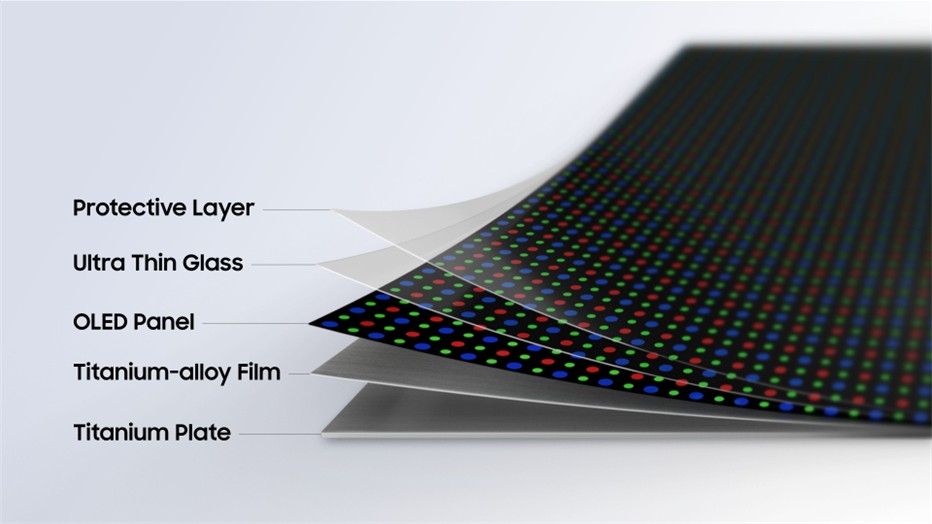
Samsung introduced Flex Titanium on July 15, 2026, for its next generation of Galaxy foldables. The structure combines a titanium-alloy film beneath the OLED panel with a titanium plate supporting the display module. The company’s stated goals are reduced crease visibility and improved durability.
What does 20x measure?
Samsung says the film has 20 times the mechanical stiffness of the polymer film used for comparison. That concerns resistance to deformation; it does not mean the complete phone lasts twenty times longer.
The distinction is useful when reading materials announcements. A figure might describe a material sample, a specific component or a complete device. A comparison needs to identify which level is being measured.
A component can also serve several engineering goals. A foldable display needs support when opened while remaining able to fold, making the arrangement and connection of its parts relevant alongside the material’s name.
Context from the previous generation
In July 2025, Samsung Display reported testing the Fold7 panel through 500,000 folds at 25°C. That announcement also described a titanium support plate and changes to the display’s layers.
This is separate historical context. A test result for the 2025 panel should not be transferred to the new structure without testing that structure. Titanium’s presence in the earlier design also shows why the news concerns its implementation and purpose, rather than simply introducing the metal’s name.
The useful perspective is development of the display assembly, not merely an addition to a materials list.
What should a user evaluate?
For someone viewing photographs or video, the effect of a less visible crease may vary with lighting and viewing angle. A meaningful comparison can use the same content and lighting so the difference is easier to interpret.
Durability also requires identifying the test. Folding, pressure and drops ask different questions; placing their results under one description does not make them equivalent measures.
Samsung says further details will be provided at Galaxy Unpacked. At this announcement stage, the available information describes the structure and its intended benefits. Assessing the complete device will require its specifications and actual testing.
The significant direction is work on internal support and the visible display surface together. Readers can follow it by connecting each claim to the component and measurement it describes, then examining how those changes affect the eventual phone.
Sources
Founder and editor-in-chief of Kurd Developers. Phone and tech news on YouTube, Instagram and TikTok.
More stories
Apple Intelligence Is Coming to China With iOS 27.3, Backed by Alibaba
After more than two years of waiting, Apple says Apple Intelligence will reach iPhone users in China in December, with Alibaba's Qwen model powering parts of Siri.

One text can break your phone: Android's 'SMS of Death' explained
A flaw in Android 12 and later lets a specially crafted SMS drop calls and even make a phone unusable. The fix is in October's security patch.

GTA VI lands November 19: prices, editions and what to know
Rockstar has locked the date: Thursday, November 19 on PS5 and Xbox Series X|S. Standard costs $79.99 and Ultimate $99.99.

Apple's first touchscreen MacBook Pro brings OLED and Dynamic Island
The new PROLED XDR display responds to touch, the notch is gone and Dynamic Island takes its place. Prices start at $2,899.