GPT-5.6 Sol, Terra and Luna arrive on Amazon Bedrock
AWS announced general availability July 13, adding another deployment path for teams running AI applications on its cloud infrastructure.


AWS announced general availability of GPT-5.6 Sol, Terra and Luna on Amazon Bedrock on July 13, 2026. The provider positions Sol for advanced reasoning, Terra for balanced capability and performance, and Luna for fast, lower-cost inference.
Availability at launch
| Model | Announced AWS Regions |
|---|---|
| Sol | N. Virginia and Ohio |
| Terra and Luna | Those regions plus Oregon |
The announcement identifies the Responses API on Bedrock as an access route. For a team already operating on AWS, that provides an option closer to its existing deployment environment.
Start the comparison with a task
AWS’s technical launch article describes the names as capability tiers. A model name provides a starting point; the application’s actual task provides the practical evaluation.
An application classifying hundreds of short messages differs from one preparing a multi-stage report from several files. Both use AI, but their waiting time, input size and output checks differ.
A team can select fixed examples for each task and compare models using the same request and starting information. That helps separate a model difference from a prompt difference and makes the results easier to interpret.
Defining the required output also matters. Does the application need one category from a fixed list, an explanatory paragraph or an answer grounded in several documents? Each implies a different definition of a useful result.
A model is one part of the application
Availability through an API does not complete the application using it. The application still needs to determine what information to send, what result to expect and how to present that result.
For message categorisation, the user needs a clear category that can be used later. For a report, the user needs a coherent document and identifiable sources. Those are product-design decisions alongside model selection.
A small end-to-end exercise can make the comparison concrete: known input, a defined request and an output someone actually uses. The decision then connects to the team’s work rather than a ranking of names alone.
The announcement matters because it adds choices within one cloud environment. Their value to an individual team depends on the workload, deployment fit and results from evaluating its own tasks. This report describes the launch and an evaluation approach; it does not provide an independent performance ranking.
Sources
Founder and editor-in-chief of Kurd Developers. Phone and tech news on YouTube, Instagram and TikTok.
More stories
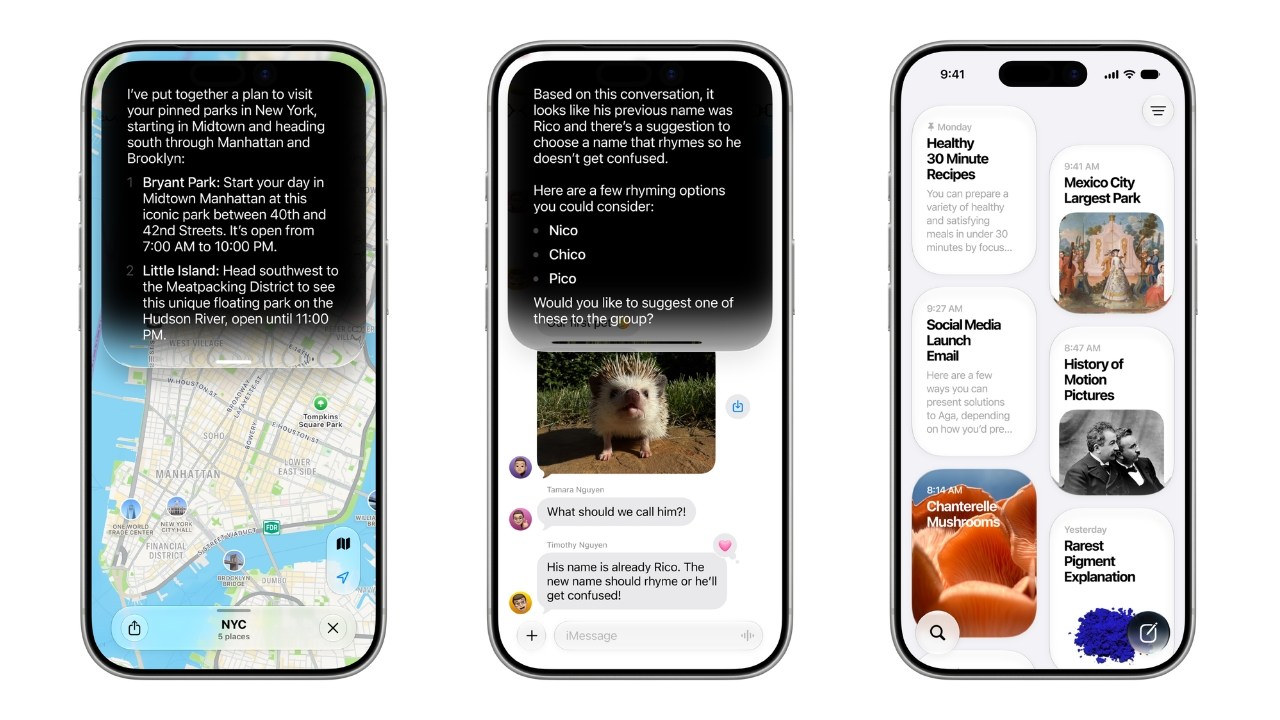
Apple Intelligence Is Coming to China With iOS 27.3, Backed by Alibaba
After more than two years of waiting, Apple says Apple Intelligence will reach iPhone users in China in December, with Alibaba's Qwen model powering parts of Siri.

One text can break your phone: Android's 'SMS of Death' explained
A flaw in Android 12 and later lets a specially crafted SMS drop calls and even make a phone unusable. The fix is in October's security patch.

GTA VI lands November 19: prices, editions and what to know
Rockstar has locked the date: Thursday, November 19 on PS5 and Xbox Series X|S. Standard costs $79.99 and Ultimate $99.99.

Apple's first touchscreen MacBook Pro brings OLED and Dynamic Island
The new PROLED XDR display responds to touch, the notch is gone and Dynamic Island takes its place. Prices start at $2,899.