NVIDIA reports $96.2 billion revenue as AWS plans two million additional GPUs
The fiscal Q2 2027 results show strong infrastructure demand. AWS's additional GPU deployment is a plan for 2027–2028, rather than capacity already delivered.

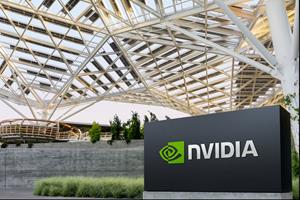
NVIDIA announced its second-quarter fiscal 2027 results on August 26. Revenue reached $96.2 billion, up 106% year over year, including $89 billion from Data Center. The quarter ended July 26, 2026: the fiscal-year label does not make this a report about the next calendar year.
Reading the numbers carefully
Revenue measures sales before the various expenses that determine profit. It should not be treated as another word for earnings. Strong sales for an infrastructure supplier also do not, on their own, establish that every customer has already built a successful business using its equipment.
A useful reading separates three questions. How much equipment is being purchased? How much useful work is being performed on it? And how much value does that work create for the organization paying the bill? A large answer to the first question does not automatically answer the other two. A customer might still be building its application, or learning whether users will keep paying for a service.
That distinction is our interpretation of infrastructure economics, rather than a prediction about NVIDIA's share price. It helps prevent a supplier's financial performance from becoming a substitute for evaluating an individual application.
AWS's expansion is a future deployment plan
In a separate announcement the same day, AWS and NVIDIA outlined plans to deploy two million additional GPUs across AWS infrastructure in 2027–2028. The collaboration also covers Vera CPU-based infrastructure, networking and software. These are forward-looking deployment plans, rather than confirmation that all that capacity is already operating.
For an application team, a planned infrastructure expansion cannot by itself answer when a particular service will become available, in which region, or on what commercial terms. Those questions require the details of the service the team can actually procure.
What developers should measure
Our suggested starting point for a small team is a defined task: translating a message, searching internal documents, or answering a customer question. Compare candidate systems against the same inputs and acceptance criteria. The option associated with the largest infrastructure announcement need not be the best fit for that task.
An evaluation should consider the cost of an acceptable result, the accuracy of the output, and the staff time spent correcting mistakes. It should also ask who owns an incident when the service fails, and whether a workflow can move to another provider without being rebuilt.
The results demonstrate the scale of the infrastructure market. A practical technology decision still depends on what a specific workload delivers within its budget. Counting GPUs in a press release cannot replace that assessment.
Sources
Founder and editor-in-chief of Kurd Developers. Phone and tech news on YouTube, Instagram and TikTok.
More stories

Apple's Price Ladder: How "Just $50 More" Walks You Into the Pricier Model
You go to buy an iPad mini, pick 256GB, and suddenly you're paying more than an iPad Air. We charted every iPhone, iPad and Mac price on Apple's US store to show where the traps are, and when stepping up is actually worth it.

Apple Intelligence Is Coming to China With iOS 27.3, Backed by Alibaba
After more than two years of waiting, Apple says Apple Intelligence will reach iPhone users in China in December, with Alibaba's Qwen model powering parts of Siri.

One text can break your phone: Android's 'SMS of Death' explained
A flaw in Android 12 and later lets a specially crafted SMS drop calls and even make a phone unusable. The fix is in October's security patch.

GTA VI lands November 19: prices, editions and what to know
Rockstar has locked the date: Thursday, November 19 on PS5 and Xbox Series X|S. Standard costs $79.99 and Ultimate $99.99.