MindTopo tests the gap between recognising a scene and planning actions
Introduced by Microsoft Research on August 12, the benchmark examines whether vision-language models can preserve spatial relationships while acting.

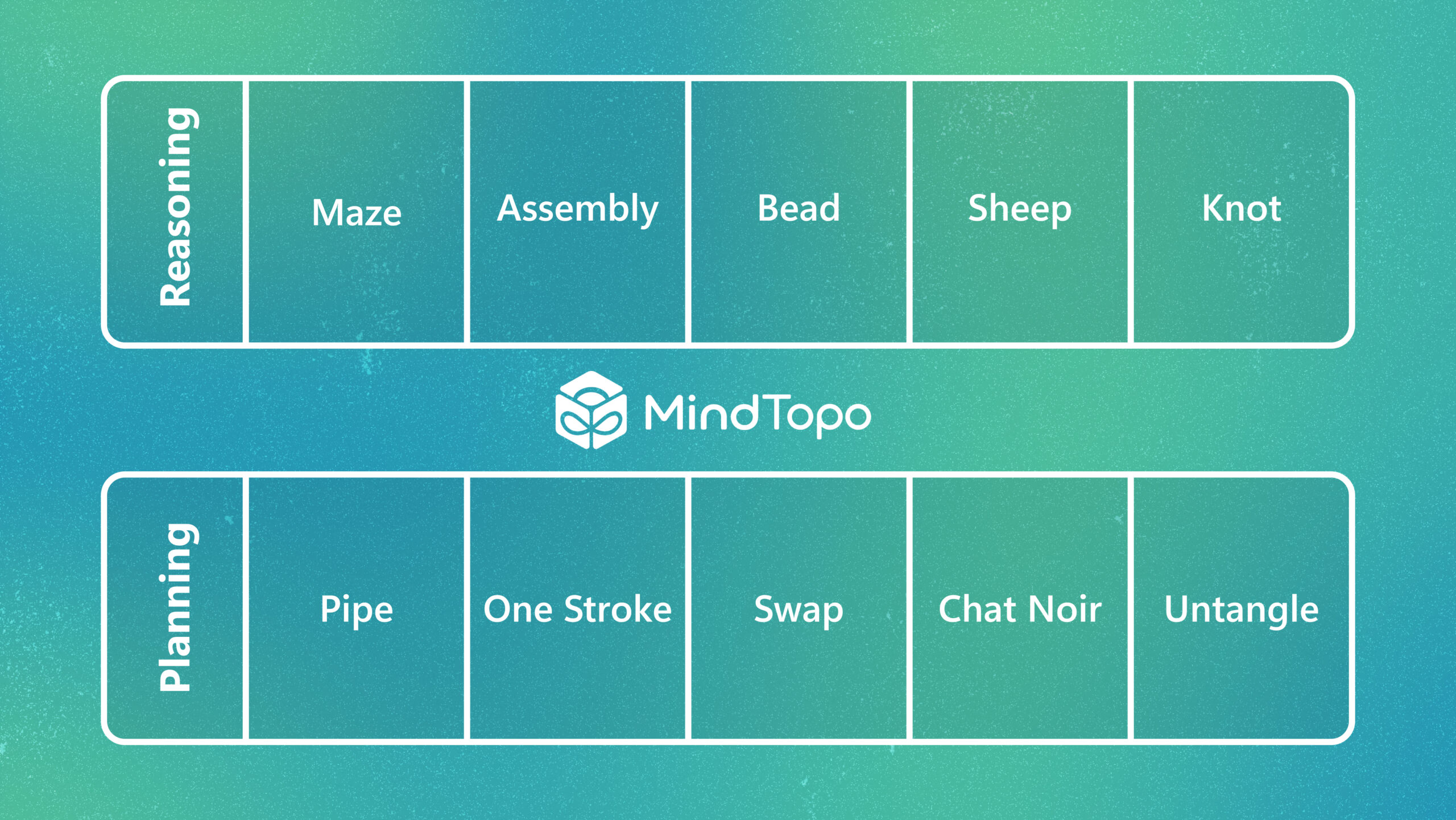
Microsoft Research introduced MindTopo on August 12, 2026, as a benchmark for vision-language models’ understanding of spatial relationships. This August 13 report examines the question at its centre: can a model preserve those relationships when it moves from describing a scene to acting within it?
More than identifying an object’s position
Topological reasoning concerns relationships such as whether a route remains connected, whether something is inside a boundary and whether a rope is genuinely knotted. Exact distances and angles are not the central question.
MindTopo organises 13 task types around continuity, separation, order, enclosure and knots. It combines questions about static images with planning tasks requiring sequences of actions in test environments.
That organisation separates recognising an existing relationship from choosing actions that preserve or change it. A final answer may look straightforward, while reaching it depends on tracking what each move does to the situation.
Recognition and planning are different tests
The researchers report stronger performance on static reasoning than interactive planning. Some failures arose after a scene had been understood, when a model needed to maintain relationships across several actions.
For illustration, identifying an open passage is different from selecting a move that leaves it open after an object changes position. The second question requires considering the consequences of an action, rather than only recognising the current arrangement. This is an explanatory example, not an experiment we conducted.
The distinction matters when assessing assistants that execute steps. A correct individual response is useful evidence, but the reliability of a complete process also depends on what happens between successive states.
What does this establish for robotics?
The research draws attention to a form of understanding relevant to interaction with environments. However, MindTopo is not a comprehensive verdict on every AI capability or every robot. It evaluates particular tasks in controlled settings.
Translating its findings to a real application requires tests appropriate to that application. Success or failure on one benchmark cannot automatically describe performance in every environment.
Our assessment is that the value of this work lies in locating a failure more precisely. Did the model misread the scene, lose track of a relationship or choose an unsuitable next action?
Those are different engineering problems. Keeping them visible gives developers more useful information than compressing recognition, state tracking and planning into a single undifferentiated score. It also helps readers interpret the findings without turning a bounded research result into a universal claim about intelligence.
Sources
Founder and editor-in-chief of Kurd Developers. Phone and tech news on YouTube, Instagram and TikTok.
More stories
Apple Intelligence Is Coming to China With iOS 27.3, Backed by Alibaba
After more than two years of waiting, Apple says Apple Intelligence will reach iPhone users in China in December, with Alibaba's Qwen model powering parts of Siri.

One text can break your phone: Android's 'SMS of Death' explained
A flaw in Android 12 and later lets a specially crafted SMS drop calls and even make a phone unusable. The fix is in October's security patch.

GTA VI lands November 19: prices, editions and what to know
Rockstar has locked the date: Thursday, November 19 on PS5 and Xbox Series X|S. Standard costs $79.99 and Ultimate $99.99.

Apple's first touchscreen MacBook Pro brings OLED and Dynamic Island
The new PROLED XDR display responds to touch, the notch is gone and Dynamic Island takes its place. Prices start at $2,899.