Leanstral 1.5: moving from suggested code to checkable properties
Mistral released the model on July 2. A July 5 report examines how proof engineering in Lean 4 differs from asking an assistant for plausible code.


Mistral released Leanstral 1.5 on July 2, 2026, positioning it for proof engineering in Lean 4 under an Apache 2.0 licence. This July 5 report examines what that direction means for developers and how it differs from requesting code that appears correct.
Finding a proof and checking one
Lean’s official textbook distinguishes searching for a proof from verifying its correctness. Formal verification expresses a property or claim in precise mathematical terms and then works toward establishing it.
Consider a function that processes a list. “Does it work on these two examples?” is different from “Does it preserve the number of elements for every input satisfying these conditions?” Both questions are useful, but they require different evidence.
That distinction is practical for a programming team. Before selecting a tool, the team needs to identify the claim it wants checked. The word “correct” does not by itself specify whether the concern is output shape, content or another property.
The model and Lean have different jobs
Lean’s documentation explains how propositions and proofs fit within the same framework. A proof must satisfy the definitions and rules on which the proposition depends.
Mistral describes a loop in which the model proposes a proof, receives compiler feedback and revises its attempt. Suggestion and checking therefore serve separate purposes: the model searches for a route, while the system checks whether the result establishes the written claim.
This provides a more precise way to read the announcement. The important output is material a system can check under stated conditions, rather than a persuasive paragraph in a conversation.
The specification still matters
Proving the wrong property does not establish the requirement a team actually needs. Describing an output as a list is much weaker than requiring it to preserve every element of the original list. Both statements could concern the same function, while asking for different guarantees.
A beginner can start with a small rule, write its conditions and understand what the checker accepts. AI assistance can then be evaluated against that concrete goal: does it help establish the required property, or merely turn the question into an easier one?
The significant direction is a shift toward inspectable questions about trust: what was requested, what was established and under which assumptions? This is an analysis of the announcement and its workflow, not an independent performance test or a claim that an entire software project has been verified.
Founder and editor-in-chief of Kurd Developers. Phone and tech news on YouTube, Instagram and TikTok.
More stories
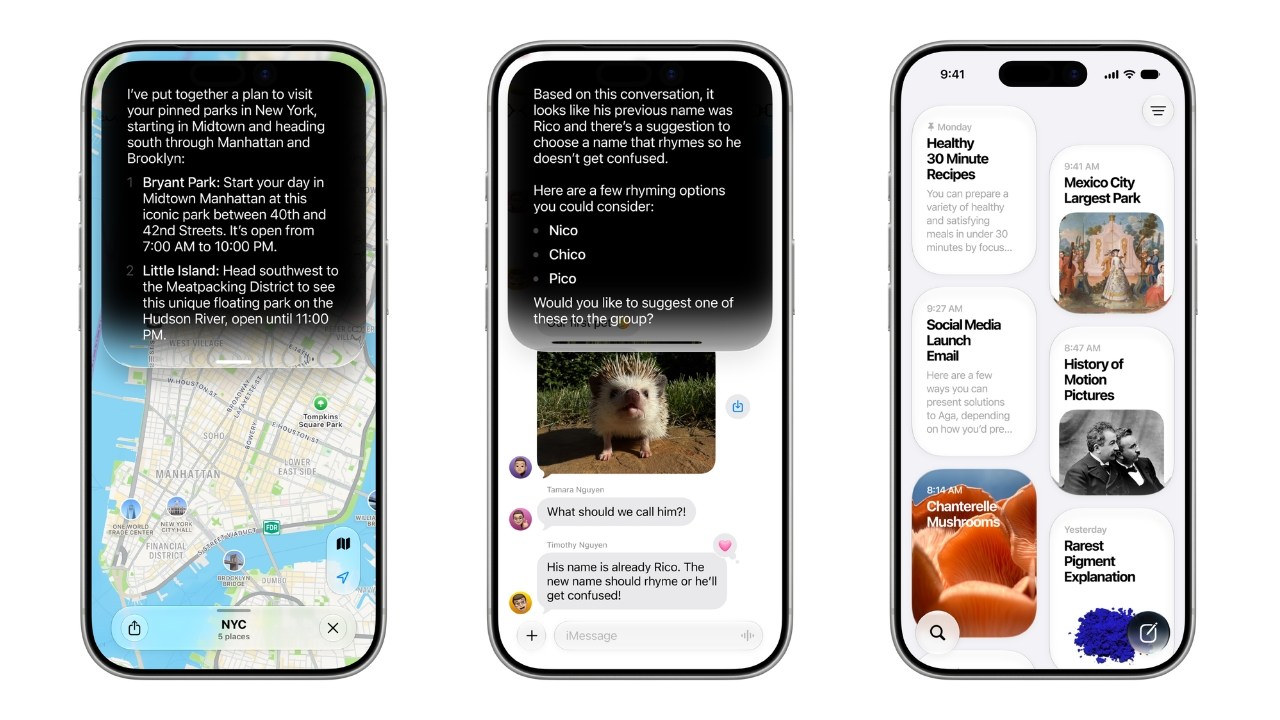
Apple Intelligence Is Coming to China With iOS 27.3, Backed by Alibaba
After more than two years of waiting, Apple says Apple Intelligence will reach iPhone users in China in December, with Alibaba's Qwen model powering parts of Siri.

One text can break your phone: Android's 'SMS of Death' explained
A flaw in Android 12 and later lets a specially crafted SMS drop calls and even make a phone unusable. The fix is in October's security patch.

GTA VI lands November 19: prices, editions and what to know
Rockstar has locked the date: Thursday, November 19 on PS5 and Xbox Series X|S. Standard costs $79.99 and Ultimate $99.99.

Apple's first touchscreen MacBook Pro brings OLED and Dynamic Island
The new PROLED XDR display responds to touch, the notch is gone and Dynamic Island takes its place. Prices start at $2,899.