Ask Maps adds food ordering and more personal trip planning
Google’s August 6 update connects conversational discovery with practical tasks. Food, hotel and event features start in the US, rather than every market receiving the broader rollout.

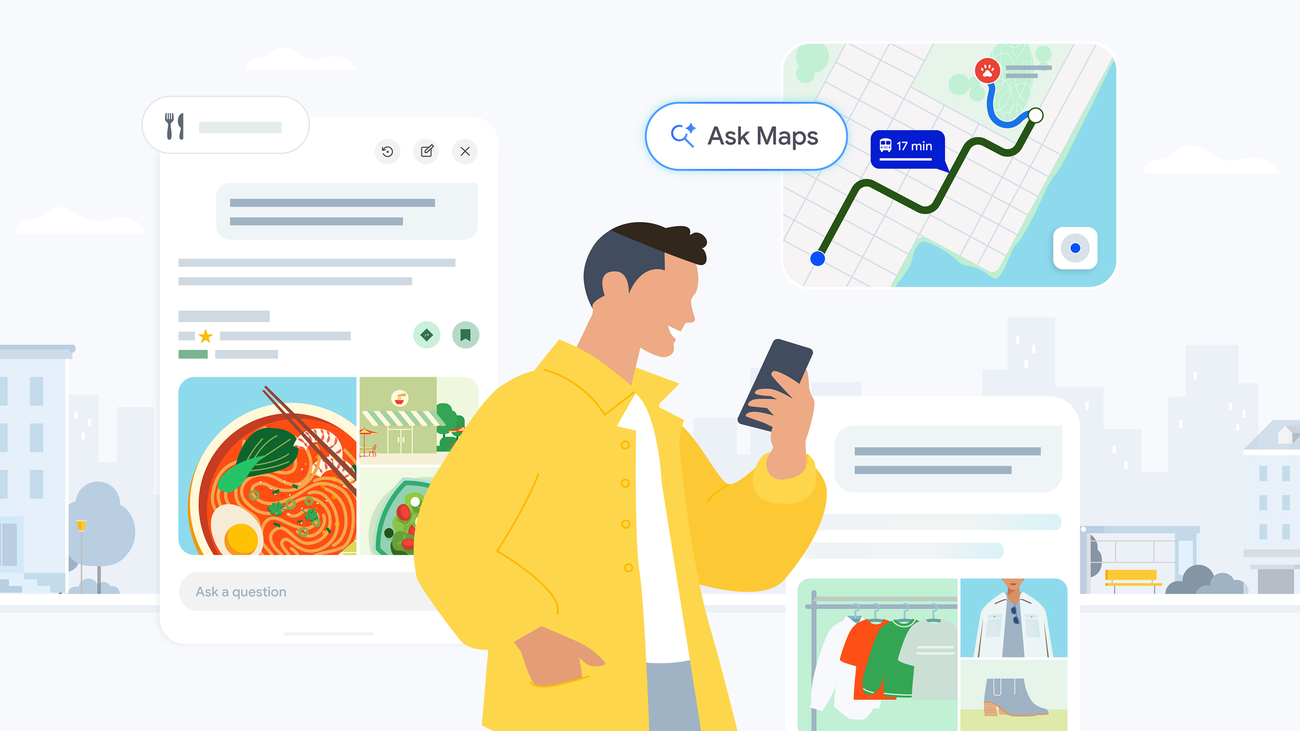
Google announced an Ask Maps update on August 6, 2026, adding food ordering, live transit information and optional Gmail connections. Food, hotel and event features begin in the United States. The announcement does not establish that these commercial functions are available in Iraq.
From a suggestion to a transaction
In the food-ordering flow, the system can put a dish in the cart after the user selects a restaurant. The user still reviews and completes the order.
That division of responsibility matters. Finding an appealing restaurant and approving a purchase are different decisions. A suggestion may fit someone’s preferences while the final total, collection time or delivery arrangement does not. The review step is where those details need to come together.
Our reading is that conversational maps will be judged on whether they preserve a clear connection between the original request and the final action. A fluent answer alone cannot show that a transaction meets the user’s requirements.
Consider a hypothetical request for dinner within a fixed budget before an evening appointment. The useful result would need to make the trade-offs visible: convenience, travel time and cost may point toward different choices. Stating those priorities explicitly should also make it easier for the user to assess the proposed plan. This is an illustrative example, rather than a test we conducted.
Personal context remains a choice
Gmail linking is off by default. Its proposed value is to make suggestions more relevant to a person’s existing plans.
Personal context can reduce repetition, but it does not determine which priority should win. A traveller might want the shortest journey, the cheapest stop or the most flexible schedule. Those are distinct goals. A useful interaction should give the person room to clarify them and reconsider the result.
It also helps to distinguish details the user supplied from assumptions within a recommendation. That makes a planning conversation easier to correct when circumstances change.
Timing and local availability matter
Transit planning involves information whose usefulness depends on when someone actually leaves. Checking the journey again close to departure is more meaningful than treating an earlier conversational response as a permanent itinerary.
For readers in Kurdistan, the other practical distinction is between access to Ask Maps and access to each feature inside it. A broad product rollout is not evidence that every local restaurant, booking service or payment flow is supported.
The update points toward a more active role for map assistants. Assessing that role requires looking at the review process, the relevance of the information and the functions actually offered to the account and market involved.
Sources
Founder and editor-in-chief of Kurd Developers. Phone and tech news on YouTube, Instagram and TikTok.
More stories
Apple Intelligence Is Coming to China With iOS 27.3, Backed by Alibaba
After more than two years of waiting, Apple says Apple Intelligence will reach iPhone users in China in December, with Alibaba's Qwen model powering parts of Siri.

One text can break your phone: Android's 'SMS of Death' explained
A flaw in Android 12 and later lets a specially crafted SMS drop calls and even make a phone unusable. The fix is in October's security patch.

GTA VI lands November 19: prices, editions and what to know
Rockstar has locked the date: Thursday, November 19 on PS5 and Xbox Series X|S. Standard costs $79.99 and Ultimate $99.99.

Apple's first touchscreen MacBook Pro brings OLED and Dynamic Island
The new PROLED XDR display responds to touch, the notch is gone and Dynamic Island takes its place. Prices start at $2,899.